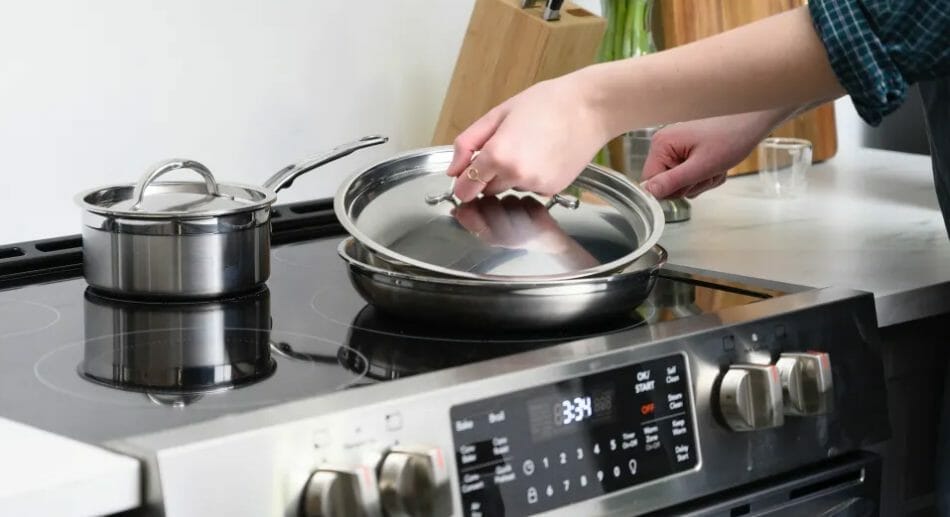
Look for pots and pans labeled “induction-ready” or with a magnetic bottom—usually that means a layered construction with a steel disc fused to the base. Brands like All-Clad, Cuisinart, or even budget-friendly Tramontina often nail this. The ideal candidate? 18/10 stainless steel with an aluminum or copper core sandwiched in the middle—that gives you the magnetic goodness and even heating. Avoid thin, cheap stainless that flexes—it’ll warp under induction’s aggressive heat and leave you with a sad, wobbly pan. Trust me, I’ve got a bent one in my garage as a trophy of bad decisions.
What About Performance? Does It Cook Well?
Honestly, stainless steel and induction are a dream team once you get the hang of it. Induction heats up crazy fast—way faster than gas or electric—so your stainless pan will go from cold to sizzling in under a minute. Perfect for searing steaks or boiling pasta in a flash. But here’s the irony: stainless steel isn’t the best heat conductor on its own—it can develop hot spots if the pan is thin or poorly made. That’s why high-quality stainless with a copper or aluminum core is the sweet spot. Oh, and don’t forget to preheat your pan slowly; induction can be so instant that you’ll burn your garlic before you blink.
 Can you use stainless steel cookware on induction Stoves
Another pro tip: use medium heat for most tasks. Induction is powerful—cranking it to high is like putting a rocket engine on a tricycle. You’ll scorch your food and ruin that shiny pan.

