If your biochemical tests scream “Cushing,” it’s time for visuals. A high-resolution MRI of the pituitary gland becomes the star of the show. Think of it as looking for a tiny, rebellious pea in the center of your brain. Tumors here are usually smaller than 10 mm—microadenomas—small enough to hide from casual scans.
If the pituitary looks clean, the search moves to the adrenal glands via CT scan. Adrenal tumors can be benign and tiny, like a forgotten charm on a bracelet. The radiologist becomes your detective, zooming in on shadows that don’t belong. It’s like a treasure hunt, but the treasure is a malfunctioning gland and you’d really rather not find it.
The Inferior Petrosal Sinus Sampling (IPSS)
For the rare but tricky cases, doctors deploy the big guns: IPSS. This is not a test for the faint of heart. They thread a catheter from your groin up into the veins draining your pituitary gland, sampling blood directly from the source. It’s invasive, a bit dramatic, and incredibly precise.
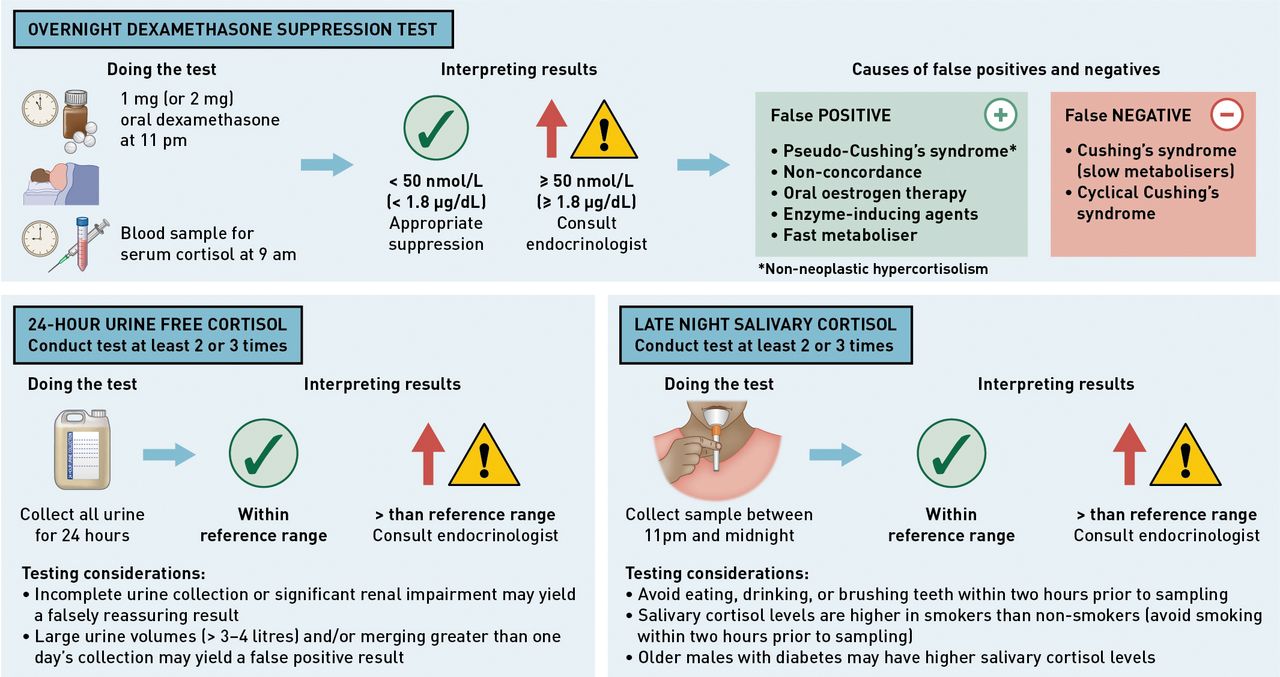
 Guide to Testing for Cushing's Syndrome and Disease
Think of it as The Bourne Ultimatum of diagnostics—intense, highly accurate, and you’ll definitely tell your friends about it afterward. This test determines if the cortisol is coming from the pituitary or from an ectopic source (like a lung tumor). It’s the final word when other tests are fuzzy.