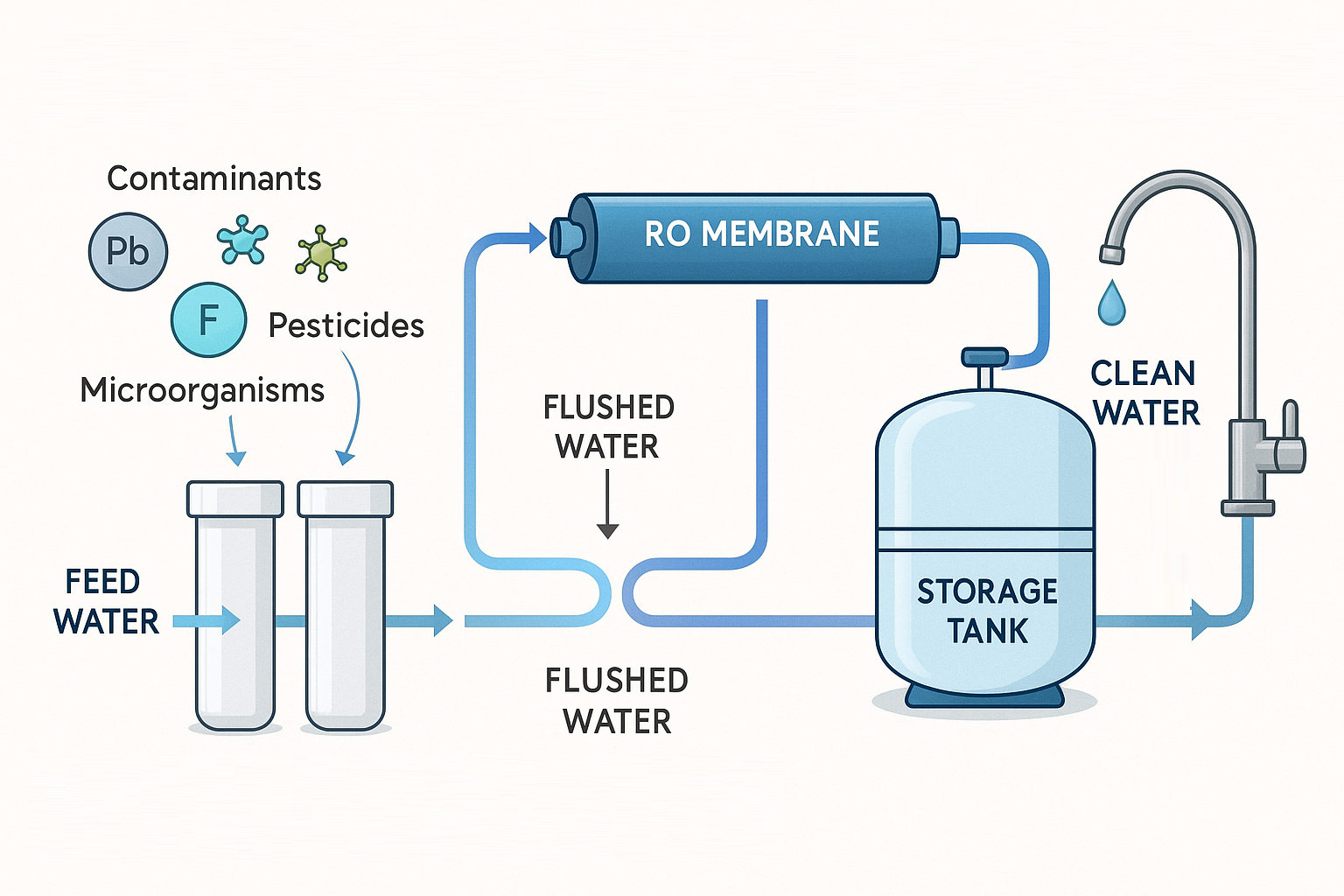
Picture a crowded nightclub. A regular filter is like a basic rope—it catches the big, clumsy troublemakers. But reverse osmosis? That’s a VIP-only velvet rope with a very grumpy guard. It’s so picky that almost nothing gets through unless it’s pure water.
The “reverse” part is the clever trick. Normally, water likes to move from a weak solution (not much stuff in it) to a strong one (lots of stuff). It’s called osmosis. Our filter flips that around. It uses pressure to push water against its natural flow.
So imagine squeezing a water balloon through a coffee filter. That’s basically it. The pressure forces H₂O molecules through a very special, very thin plastic membrane. The bad guys—the salt, the metals, the yuck—are just too big to fit through.
The three amigos of filtration
A good reverse osmosis system isn’t just one party trick. It’s a team of three hard workers. First comes a sediment filter. This catches the big, obvious stuff like sand, rust flakes, or that one leaf that snuck in from the garden hose.
Next up is a carbon filter. This is the deodorant of the operation. It grabs the chlorine that makes your water smell like a public pool, and it takes out the weird, earthy taste. It’s all about making the water feel fresh, not just clean.
 Reverse Osmosis (RO) | Water Filter Bali
Finally, the star of the show: the reverse osmosis membrane. This is the microscopic, coiled-up maze. Water is forced through layer after layer. By the time it pops out the other side, it’s almost as pure as the water that falls as rain on a mountain top.

