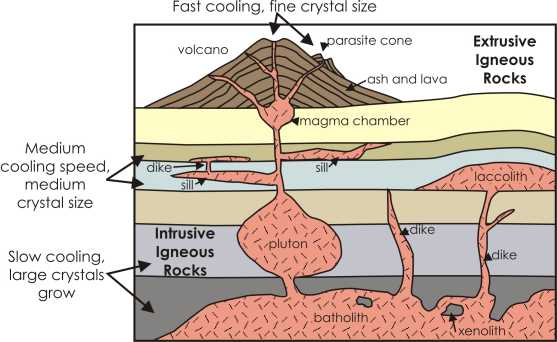
So, this big, cooled blob of rock is sitting miles under a mountain. How do we ever get to see it? Well, time and the weather are your friends.
Imagine a giant block of stone buried under layers of soil and sand. Over millions of years, rain, wind, and rivers slowly wash away all that dirt on top. It’s like peeling a giant onion, but with nature playing chef.
Eventually, the hard intrusive rock—which is often tougher than the stuff around it—gets left behind. It becomes a mountain peak, like the famous Half Dome in Yosemite. That whole massive cliff is one big piece of intrusive igneous rock that got uncovered.
Or, it might just poke out as a rounded hill, like a giant’s bald head deciding to take a peek at the sun.
Everyday Examples: More Common Than You Think
You’ve probably touched intrusive rock without even knowing it. Your kitchen counter might be made of granite—the superstar of the intrusive family. That speckled, incredibly hard surface started as magma deep underground.
 Intrusive Igneous Rocks Are Formed
Ever seen those big grey stones in a garden or a riverbed that look like they’re made of salt and pepper? That’s gabbro, another intrusive rock. It’s denser and darker than granite, like the older, grumpier cousin.
And if you’ve ever been to a fancy building with polished stone pillars, you’ve probably admired diorite. It’s a speckled gray-and-black rock that looks like it’s straight out of a Roman palace.

