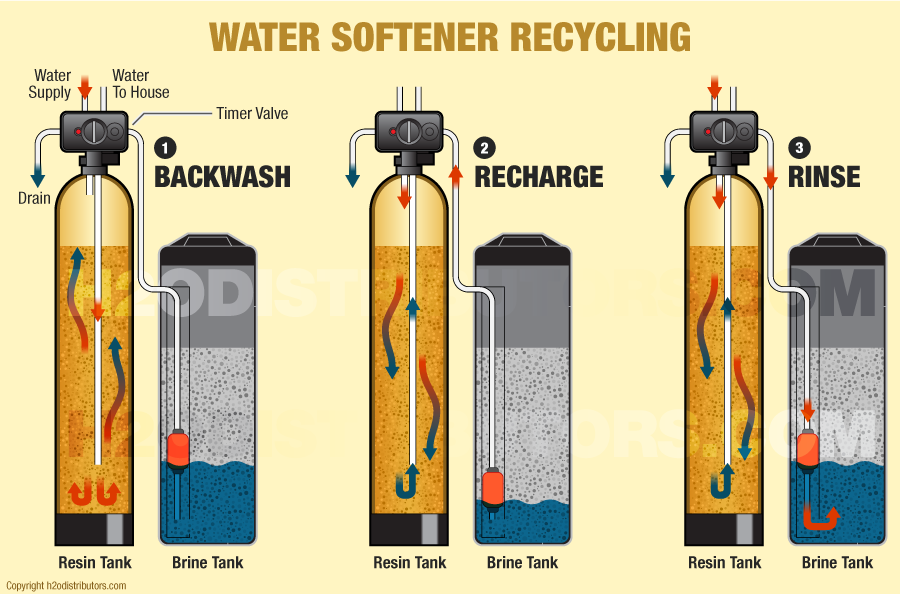
Imagine your water softener is a nightclub bouncer. Hard water rolls up with these big, heavy calcium and magnesium ions—the troublemakers. The bouncer says, “Sorry, you can’t come in unless you swap with someone else.”
That someone else is a friendly little sodium ion (aka salt). Inside the softener’s tank are millions of tiny resin beads, each coated in these sodium ions. When hard water flows through, the beads grab the calcium and magnesium, and in return, they release their sodium. It’s a chemical swap party.
The result? The water that leaves your tap now only has sodium—no scale, no spots, no drama. Your appliances breathe a sigh of relief, and your hair stops feeling like straw. You’re welcome, hair.
The Resin Beads: Tiny Hairy Heroes
Those resin beads are the real MVPs. They look like tiny, yellow BBs, but they’re full of negative charges—like little sticky hands that love grabbing positively charged mineral ions. Think of them as Velcro with a sweet tooth for calcium.
But here’s the kicker: these beads can only hold so many minerals before they get full. After a while, they’re like a stuffed turkey after Thanksgiving—useless. That’s where the next step comes in.
And it involves salt. Lots of it. Which, let’s be honest, is the most satisfying part of owning a water softener.