Before water reaches the aquifer, it has to survive the vadose zone. That’s a fancy name for the “not yet wet” layer of dirt and rock. It’s like the waiting room for water.
Here, gravity is the bossy manager. It pulls water down, but tiny rock grains hold onto it like a toddler with a toy. This creates a film of water around each grain—called pellicular water—which is basically water’s version of a cozy blanket.
Eventually, if enough water piles up, gravity wins. The water breaks free and drips down to the water table. That’s the top of the aquifer party zone.
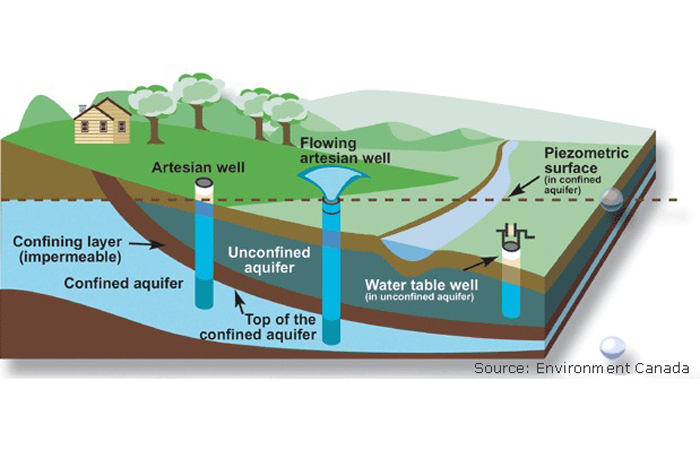 Inside An Aquifer
Snowmelt: The Sneaky Helper
Rain isn’t the only way. Snowmelt is a quiet, determined hero. Imagine a pile of snow in spring—it doesn’t just vanish. It melts slowly, giving the ground a gentle drink instead of a firehose blast.
This slow soak is way more efficient. It can recharge an aquifer with almost no runoff. So next time you complain about slush, remember: it’s saving your tap water.
And rivers? They can lose water to the ground, too. Sometimes a river flows over a cracked riverbed, and poof—half its water is gone, sneaking into the aquifer like a kid hiding under their bed.