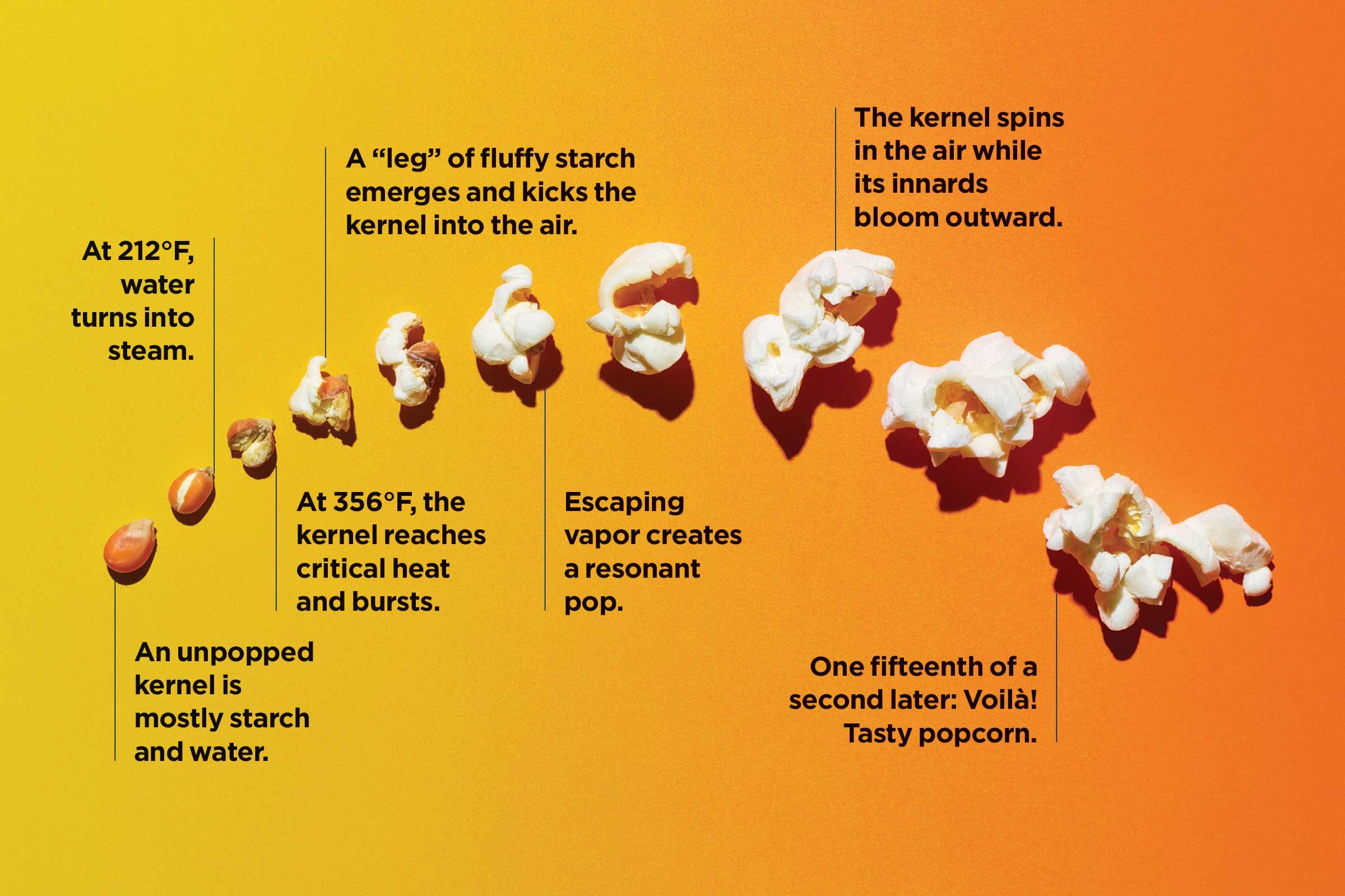
Believe it or not, popcorn and lava lamps share a similar trick. In a lava lamp, heat makes the wax expand and float up, then cool down. In popcorn, heat makes water turn to steam, forcing the starch to expand explosively.
Both use heat to create movement—one is just a lot louder and tastier. Which would you rather have on movie night?
What Happens if You Go Way Past 356°F?
What if you cranked the heat too high, say, to 500°F? You’d get a burnt, smoky mess. The kernel would still pop, but the starch would scorch instantly, turning your snack into bitter charcoal.
There’s a sweet spot: too low, and nothing happens; too high, and you ruin the flavor. Popcorn is a bit like Goldilocks—it demands things just right.
So really, making perfect popcorn is about respecting that 356°F moment. It’s a narrow window of quick, intense heat, and when you hit it—bam—you get a handful of delicious clouds.