
Oh, you think you’re slick, handing me y = (x - 3)(x + 1)? Fine. The zeros are x = 3 and x = -1. The axis is the midpoint between them. Add them: 3 + (-1) = 2. Divide by 2? 1. The axis is x = 1. Easy as grabbing the last cookie.
Fun fact: The ancient Babylonians had a version of this 4,000 years ago—but they used clay tablets and got sand in their formula. You’re welcome I upgraded you to breakable plastic calculators.
What if the equation is in vertex form: y = a(x - h)² + k?
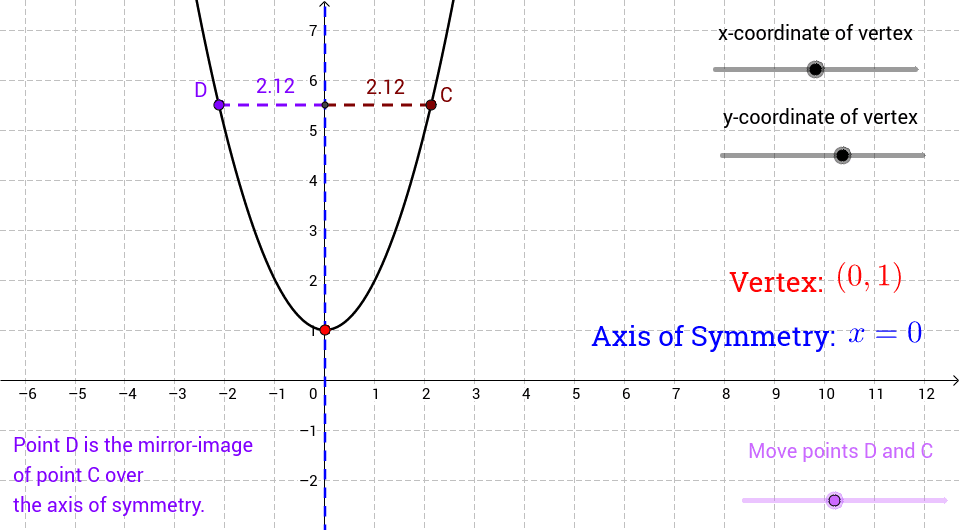
Then you’re done before you started. The axis is x = h. Yes, just h. The “-” sign is already baked in like a math pastry. If your vertex is (2, 5), the axis is x = 2. No calculations, no crying.
This is the VIP lounge of axis-finding. Pass go, collect your parabola.
Here’s a surprising truth: The axis of symmetry never leaves the x-axis’s dance floor. It’s always a vertical line, because parabolas are drama queens that only flip up or down. If your parabola opens sideways (like a sideways smile), you’ve entered a different universe called “You’re in pre-calculus now, good luck.”
 Axis Of Symmetry Page 1

