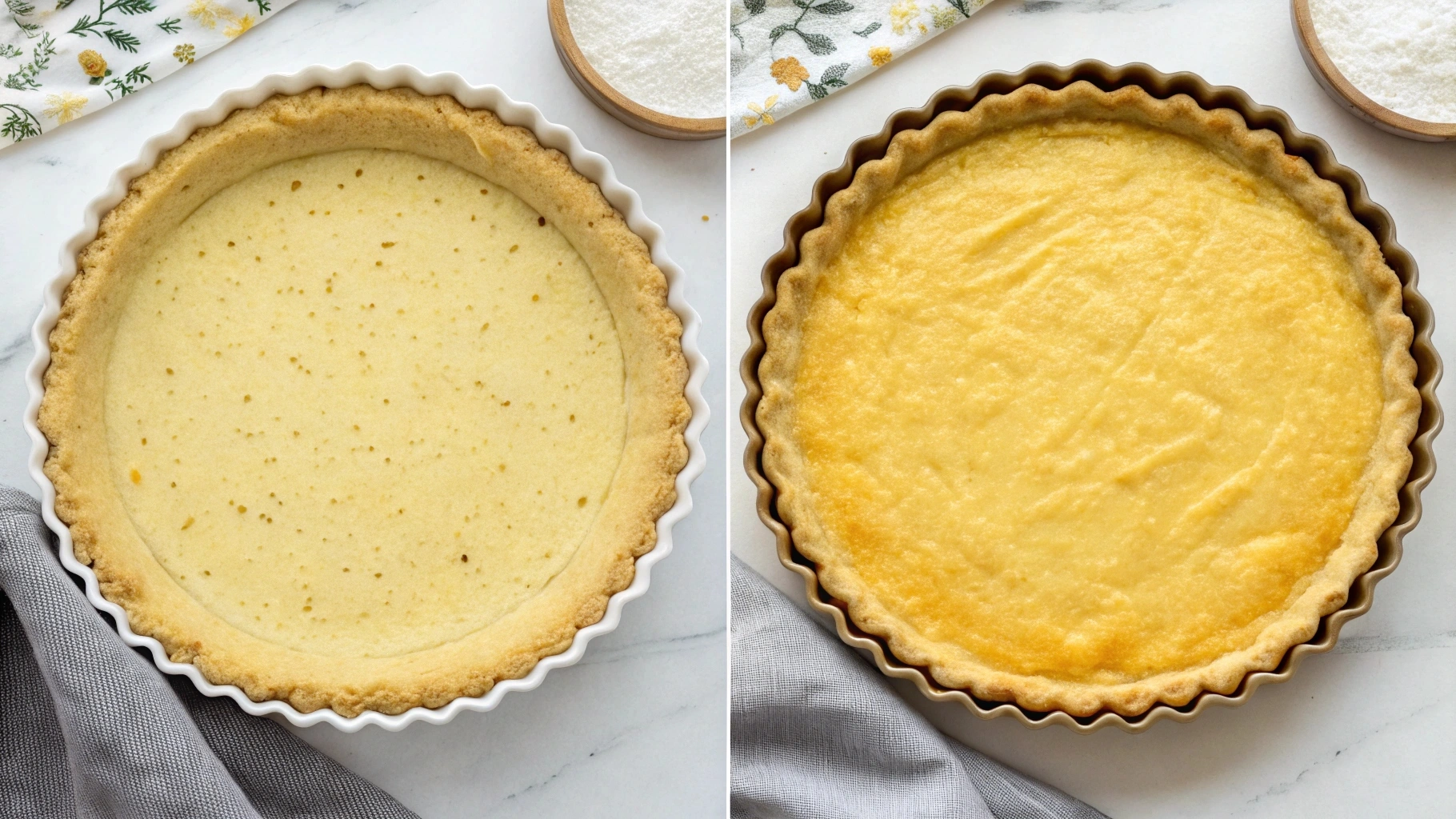
Here’s the surprising fact: quiche filling is mostly water. Eggs are 73% water, milk and cream are over 80% water. So when you pour that lovely mixture into an unbaked crust, you’re basically dropping a water balloon into a flour hotel. That balloon will pop, and the hotel will dissolve.
Some people think they can outsmart the physics by using a thicker crust or a higher fat content. They are wrong. The only way to win is to evict the water before it moves in. That means getting that crust hot and set before the filling ever touches it.
A fully pre-baked crust is golden, crisp, and aromatic. It’s like a little edible bowl of armor. But—and this is the strange part—you don’t want to bake it all the way through if you’re filling it right away. A partial pre-bake (10-15 minutes) is your sweet spot.
The Parchment Paper & Rice Gambit
Now, how do we actually blind bake without the crust puffing up like a angry pufferfish? You need parchment paper and pie weights. What are pie weights? Little ceramic beans or metal chains. If you don’t have them, use dried beans, rice, or even a stack of pennies. I once used my neighbor’s old foreign coins. It worked, but I felt like a pirate.
 Know your Pastries - Different Types of Crust Explained - Veena Azmanov
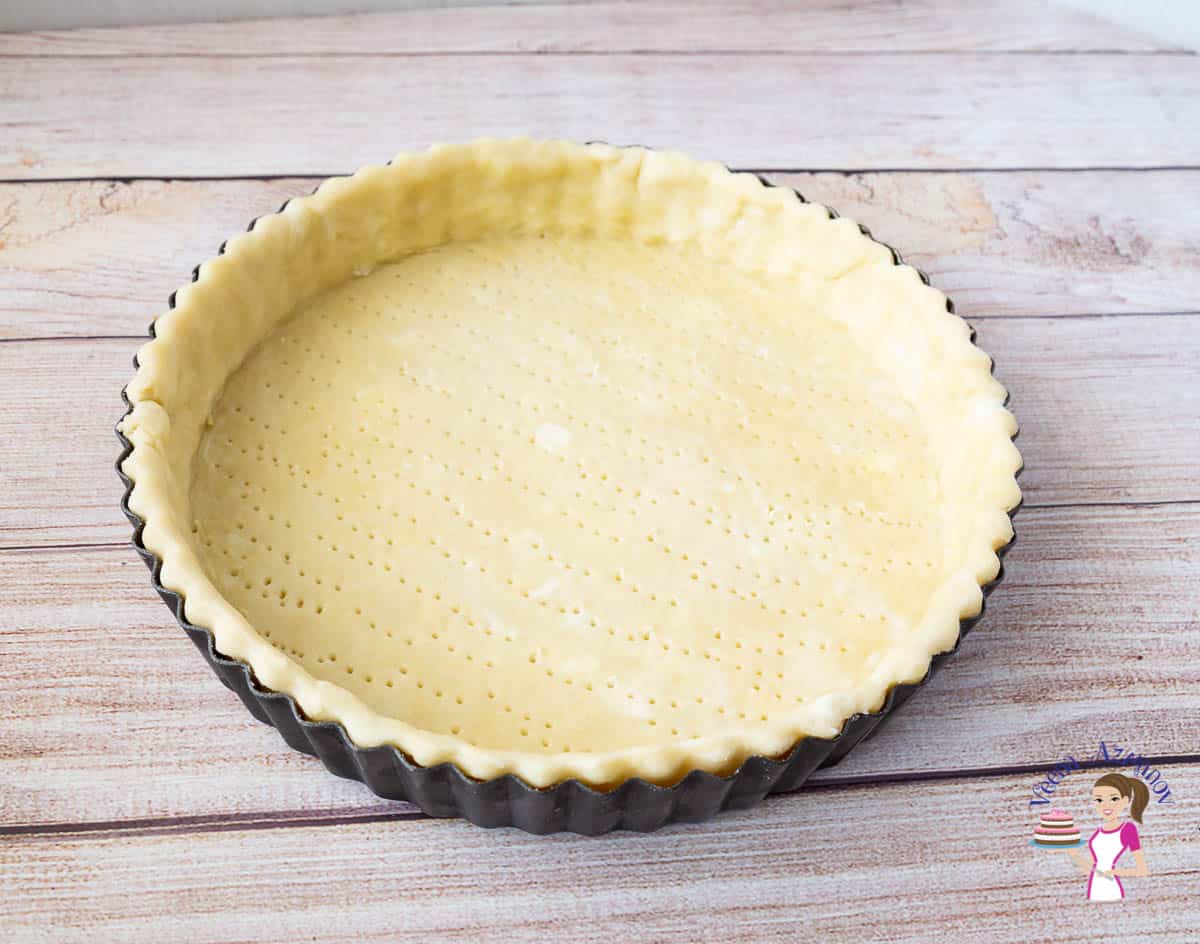
Line your crust with parchment paper, then pour in your weights. This keeps the dough from bubbling up. Bake it at 375°F (190°C) for about 12-15 minutes. Then, carefully lift out the paper and weights. The crust should look set but pale, like a Victorian child after a long winter.
Here’s the magic trick: prick the bottom of the crust with a fork before you add the paper and weights. You want steam vents. Unchecked steam will create bubbles that lift the crust off the pan, making it look like a topographical map of a war zone.