
Honestly, at this point I could give you the standard “it’s essential for understanding quadratic functions” speech. But let’s be real: you probably just need to pass a test or help your kid with homework. So here’s the shortcut.
If you know the axis of symmetry, you know where the parabola is centered. You know where it turns. You avoid drawing a distorted, wobbly U-shape that looks like a sad face. And nobody wants a sad U-shape.
It also tells you if the parabola opens up (smiling) or down (frowning). If a is positive, it smiles. If negative, it frowns. Your axis of symmetry doesn’t care about the mood—it just holds the mirror steady.
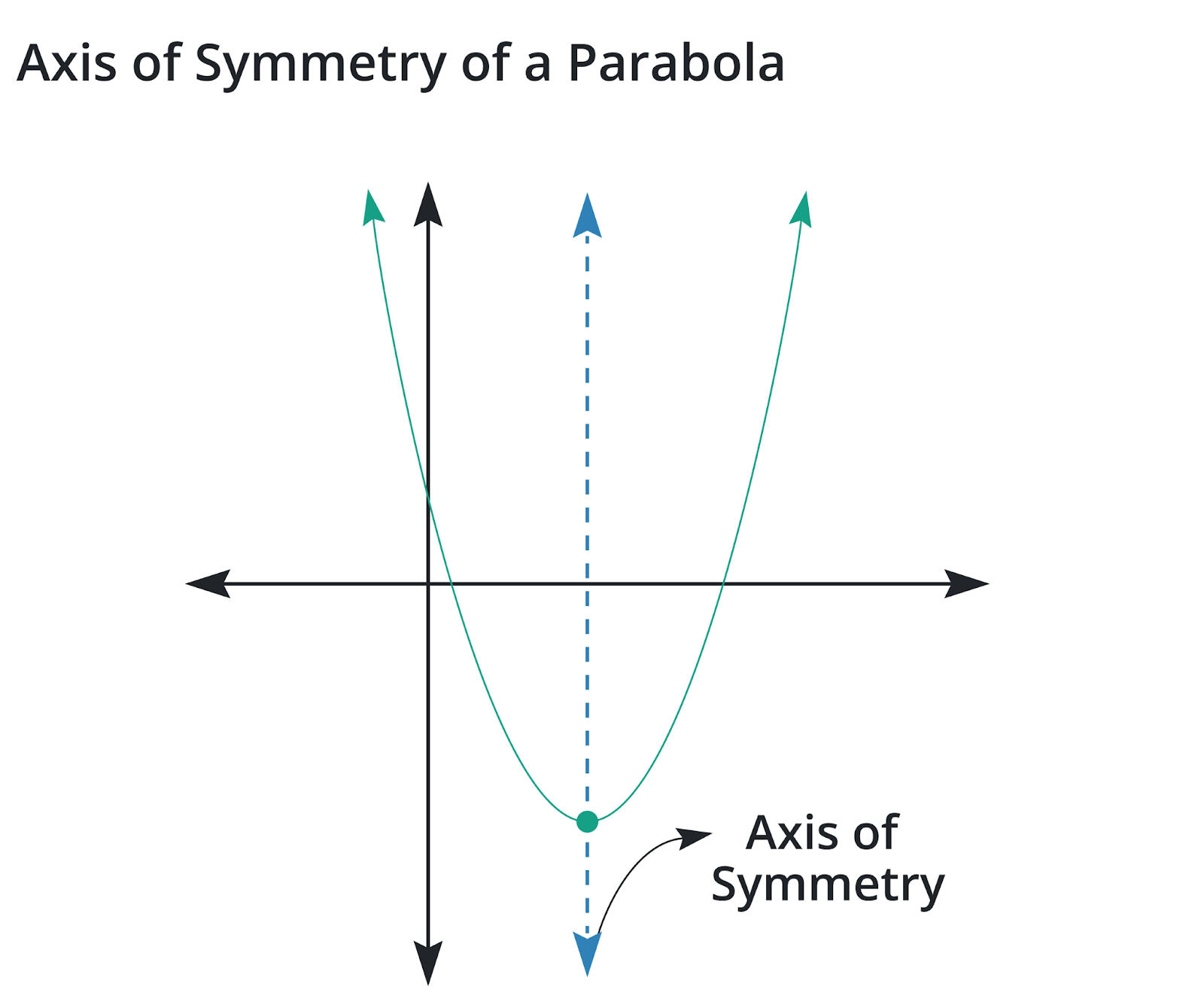 Axis Of Symmetry
A Quick Reality Check (With a Dash of Irony)
Here’s where it gets funny. Your textbook will probably have you graph a parabola like y = x² - 4x + 5. You’ll find the axis at x = 2, plot the vertex, and draw a perfect little U. And you’ll feel like a math wizard for about thirty seconds.
Then you’ll go outside, and nothing in real life is a perfect parabola. Well, except for satellite dishes and the arc of a basketball shot. But your morning coffee spill? That’s a chaotic splat. Life is messy. Math gives you the clean version.
So enjoy the clean version. Relish that perfect axis. Because when you draw that dashed line and see both sides match, you’re basically summoning order out of chaos. And that’s pretty powerful for a Tuesday afternoon.

