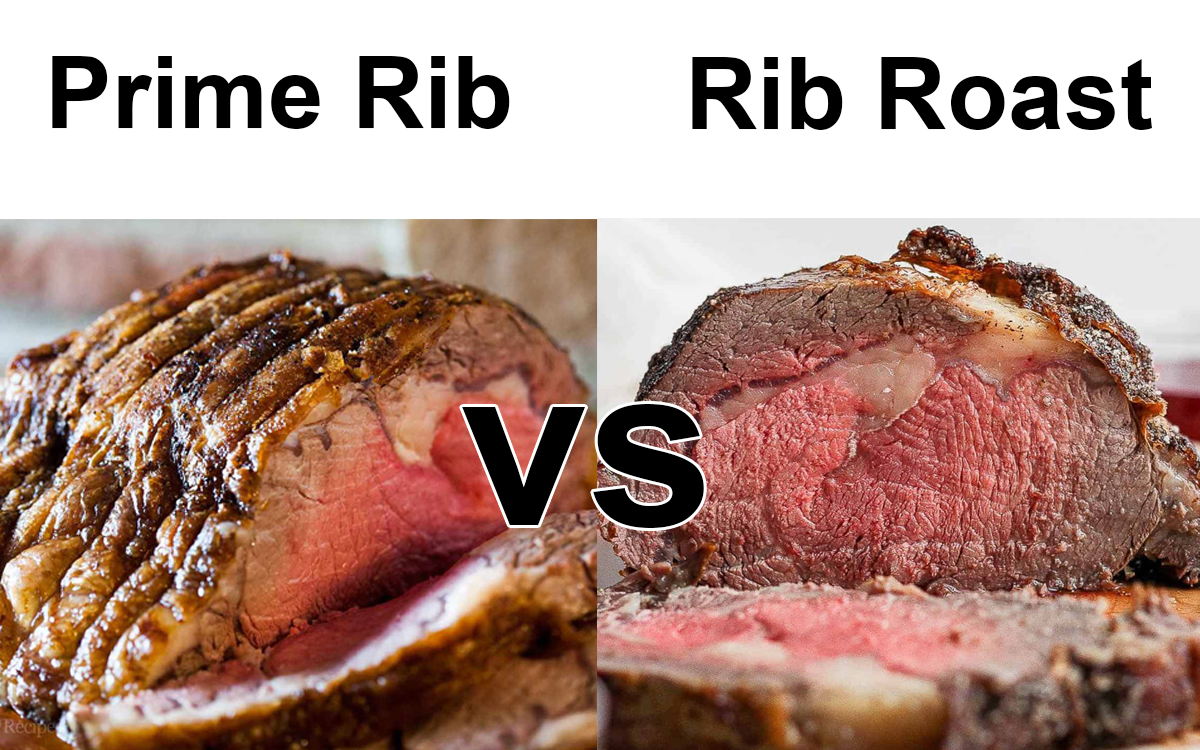
Now, Prime Rib is what happens when a Standing Rib Roast goes to finishing school. It’s the exact same cut—ribs six through twelve—but it’s cooked as a whole roast, then sliced into thick, steamy slabs and served immediately. That’s it. The difference is timing and service, not biology.
 Standing Rib Roast Vs. Prime Rib: Understanding The Key Differences
Think of it this way: a Standing Rib Roast is the unrevealed masterpiece in the oven, waiting for its glorious debut. Prime Rib is the diva on the stage, already cut, already au jus-ed, and demanding applause. If you see “Prime Rib” on a restaurant menu, you’re paying for someone else to have roasted the whole thing and then sliced it for you. It’s the same cow, just with better table manners.
The Great Grade Deception
Here’s a surprising fact that will make you look like a genius at your next holiday dinner: “Prime” in Prime Rib does not mean USDA Prime. I know, it’s a bait-and-switch worthy of a magician. “Prime Rib” is a cut name, not a quality grade. You can buy a Select-grade Standing Rib Roast and call it “Prime Rib” after you roast it, and the USDA won’t send the meat police.
The real USDA Prime grade is only given to about 2-3% of all beef, and it’s all about marbling—those little white fat veins that make meat taste like heaven. So a Prime-grade Standing Rib Roast is the Cadillac, while a Choice-grade Prime Rib is still a very nice Honda. Don’t let the fancy name fool you into paying $100 for a Honda with a Ferrari decal.

