
Alkaline is basically anything that makes an acid shut up and go away. If you’ve ever had heartburn and gulped down an antacid, you’ve weaponized alkalinity. That chalky pink tablet? It’s loaded with alkaline compounds, like calcium carbonate—the same stuff in seashells and chalk—that neutralizes stomach acid.
But my favorite example is bleach. Bleach has a pH around 13—so alkaline it makes your skin feel slick as a dolphin and starts dissolving dirt. And if you’ve ever accidentally mixed bleach with an acidic cleaner like vinegar? Run. You’ll create chlorine gas, which is the universe’s way of saying “Stop being a chemistry cowboy.”
On the other hand, your blood is a fussy little diva. It likes to stay at a pH of about 7.35 to 7.45—slightly alkaline. If it drifts even a tiny bit, your cells start panicking and you might pass out. Your body spends all day, every day, using lungs and kidneys to keep that pH balanced. It’s like a 24/7 cocktail party where the bouncer is your pancreas.
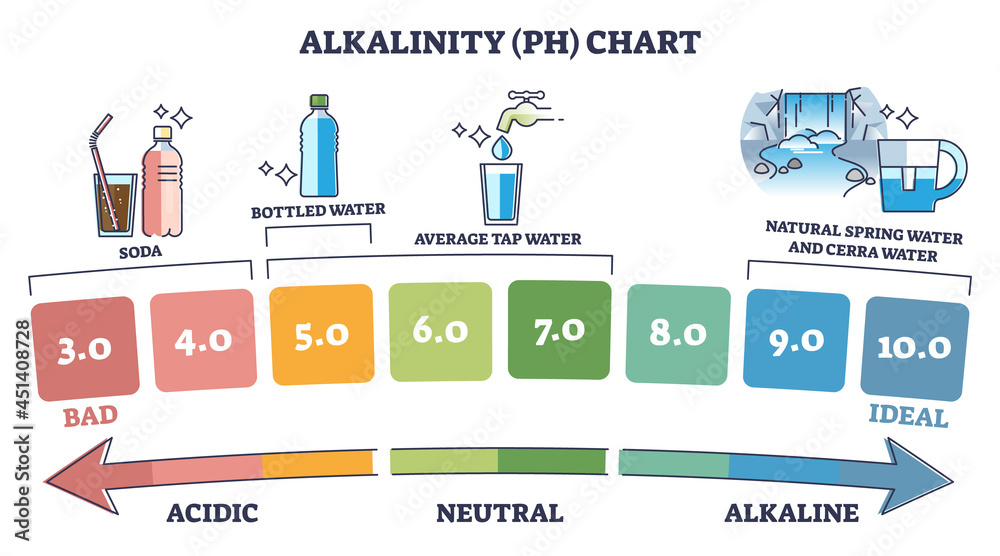 Alkalinity PH chart with water acidity from bad to ideal outline
The “Alkaline Water” Craze: Hype or H2Whoa?
You’ve seen those expensive bottles: “Alkaline Water, pH 9.5!” It promises to hydrate you better, cure your hangover, and maybe even teach your dog to fetch the remote. Let’s be real: drinking alkaline water won’t make you a superhuman. Your stomach is a pocket of hydrochloric acid with a pH of about 2—it’s basically the acid-tank of the Incredible Hulk. That fancy pH 9.5 water gets instantly neutralized the moment it hits your gut.
Here’s a surprising fact: some studies suggest alkaline water might help with acid reflux or hydration after exercise, but the effect is tiny. You’re better off eating a banana (pH ~5.5) and drinking tap water. But hey, if you like paying five bucks for fancy spit-neutralized water, go for it. Just don’t trick yourself into thinking you can fight a bear afterward.

