
Boiling tap water is brilliant at one specific thing: killing living critters. Bacteria, viruses, and parasites (like that unpleasant-sounding Giardia) can’t handle a rolling boil for a minute or two. It’s like throwing a tiny, wet rave and then cranking the heat until everyone passes out. Goodbye, germs.
But here’s the ironic part: if your water is contaminated with lead, pesticides, or industrial chemicals, boiling does next to nothing. In fact, it can make things worse. As water boils, some of it evaporates, so those nasty chemicals get more concentrated. Suddenly, your “purified” water is a tiny bit more toxic. Oops.
So, when should you actually reach for the kettle?
If you’re camping and the stream looks crystal clear but you know a beaver just did its business upstream—yes, boil it. If your city issues a “boil water advisory” because a pipe burst—boil it for a full minute, and don’t argue. That’s the one time your grandma’s advice is pure gold.
For daily tap water from a modern municipal system, though? You’re probably wasting the gas. Most cities treat water with chlorine or chloramine, which already kill the bugs. You’re not getting extra safety, just a slightly flat taste. (And yes, you’re making your kettle angry.)
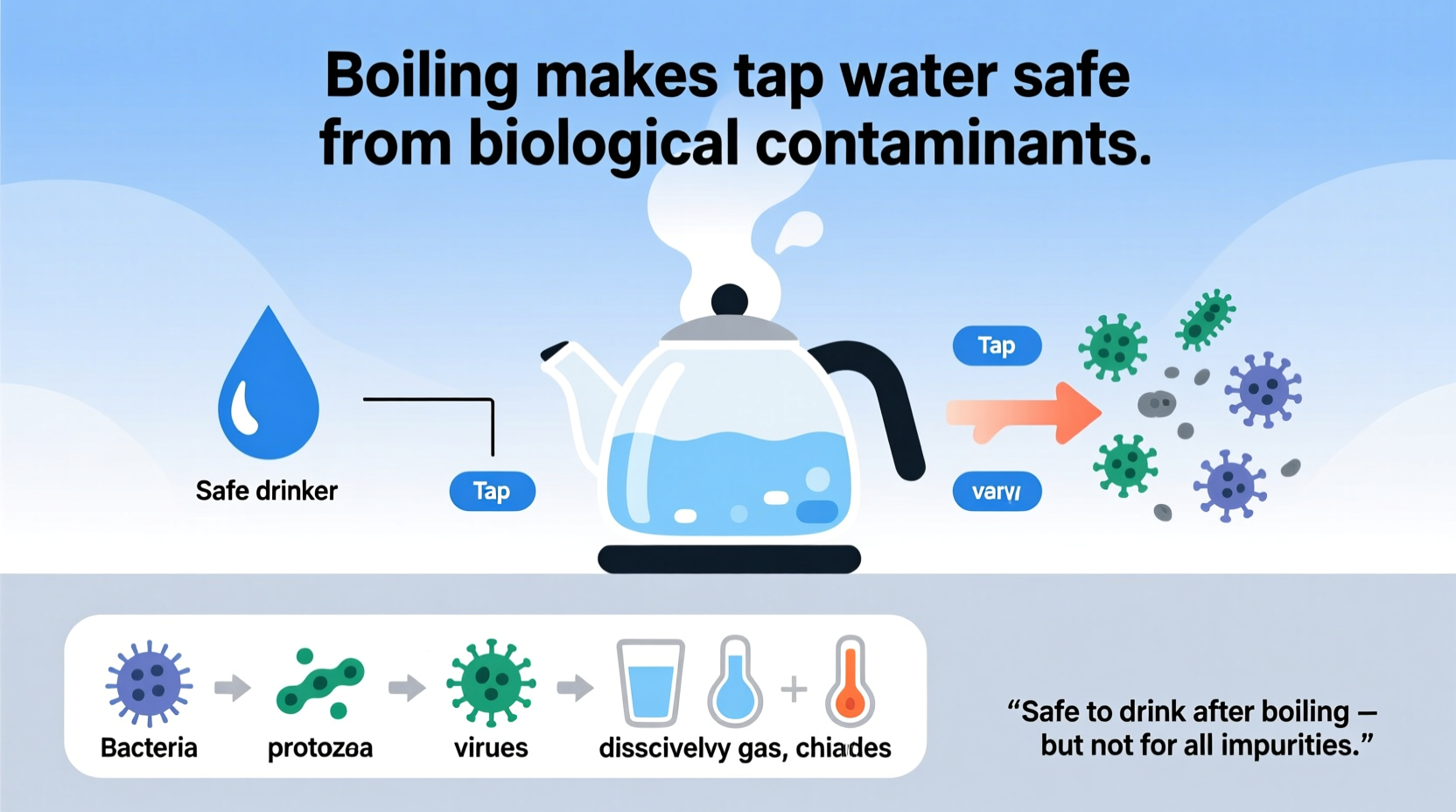 Is Tap Water Safe To Drink After Boiling And What It Removes

