
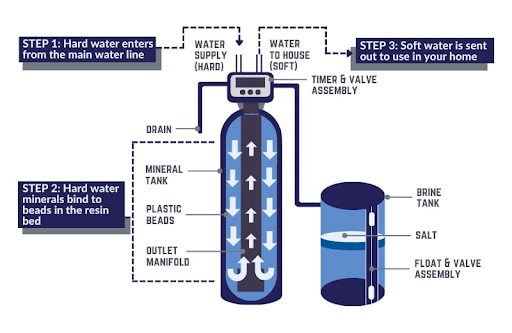
Your water softener is basically a lazy slacker that gets a second wind every few days. Inside, it’s full of tiny resin beads that act like magnets for the calcium and magnesium that make your water "hard." These beads are greedy little goblins; they grab those minerals and refuse to let go.
But here’s the kicker: those beads can only hold so much. After a few days of bathing your family and washing your dishes, they get stuffed. They’re like you after Thanksgiving dinner—completely useless until they purge.
That’s where regeneration comes in. It’s the water softener’s way of saying, “I ate too much, time to hit the gym and take a salt bath.”
The Epic Salt Flush (Aka the Regeneration Cycle)
Regeneration is a four-step circus act. First, it backwashes: flushing out all the nasty sediment and loose junk that floated into the tank. Think of it as your machine blowing its nose after a dust storm.
Then comes the brine rinse. This is the main event. The softener pulls salty water from a separate tank—we’re talking a brine soup so strong it would make a pretzel jealous. This salty tsunami floods the resin beads and throws the calcium and magnesium off like a bouncer at a nightclub.
Here’s a surprising fact: the salt doesn’t just "wash" the beads. It uses a little trick called ion exchange. The sodium ions literally swap places with the hard minerals. It’s science’s version of a prisoner exchange, but with fewer helicopters.
Finally, the softener rinses and refills. It flushes away the brine-and-mineral mixture down the drain, then tops off the water tank. The beads are now clean, fresh, and ready to trap more hardness until you hear that gurgle again.
 Can I Use Water While a Water Softener is Regenerating?

