Rock salt is the bargain-bin fighter of the salt world. It’s cheap, mined from the earth, and looks like something a dinosaur sneezed out. But here’s the kicker: rock salt is about 98% pure, and the other 2% is insoluble gunk—sand, clay, and old riverbed drama. That gunk collects in your brine tank like melted ectoplasm, forcing you to clean it out every six months or risk a salt bridge so thick you could park a golf cart on it.
Now, solar salt is the beach-bum cousin. It’s made by evaporating seawater, which sounds poetic, but the result is small, porous crystals that dissolve faster than your New Year’s resolutions. Solar salt is usually 99.6% pure, but those little crystals love to clump together in humid weather. You’ll find yourself chiseling a salt iceberg out of your tank while your spouse films it for TikTok.
Finally, the heavyweight champion: evaporated salt. This stuff is produced using a fancy, industrial “vacuum pan” process that makes pure white salt pellets or cubes. It’s 99.9% pure—essentially the James Bond of salts. No grit, no clumping, no tantrums. It dissolves beautifully and leaves almost zero residue. The only downside? It costs a little more, but so does therapy, and you’ll need that if your cheap salt ruins your softener.
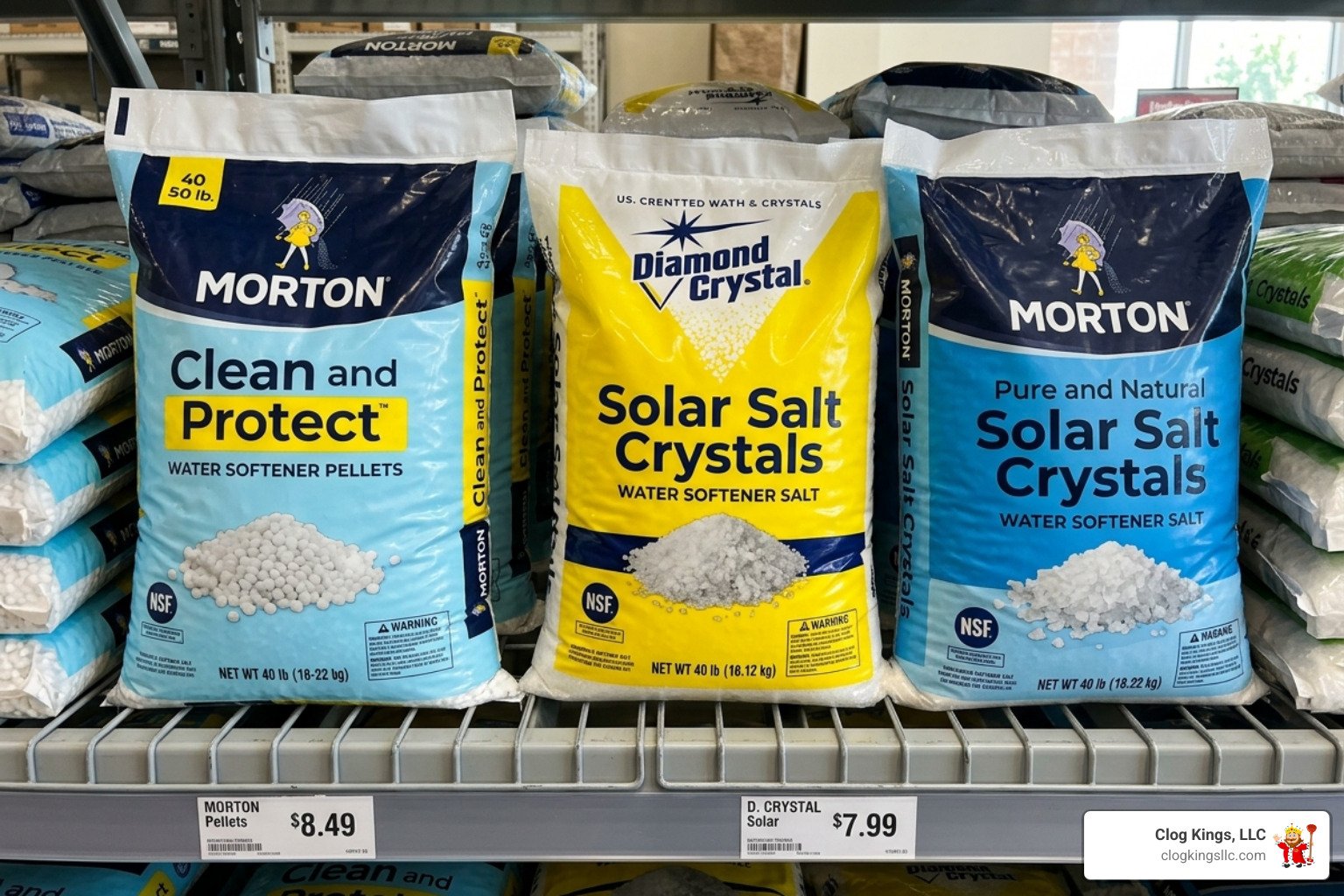 Best Water Softener Salt: Pellets, Crystals, and Blocks Compared – CLOG
Wait, What About Potassium Chloride?
You might’ve seen bags labeled “potassium chloride” and thought, “Ooh, fancy!” Potassium chloride is salt’s hipster roommate—it works the same way but uses potassium instead of sodium. Fun fact: it actually lowers the resin efficiency, so you’ll need 20-30% more of it to soften the same amount of water. That means you’re refilling the tank twice as often, and your wallet will start crying in the shower. It’s great if you’re on a low-sodium diet, but for most people, it’s a painful overkill. Stick with evaporated salt unless your doctor literally hands you a prescription.