Here’s where it gets spicy. Tipped workers—your servers, bartenders, and bussers—live on a federal subminimum wage of just $2.13 an hour. Yes, that’s real, and no, it hasn’t changed since 1991, when dial-up internet was a thing.
The logic? Tips make up the difference. But in practice, it’s a gamble that leaves many workers vulnerable to bad tippers or slow nights. Seven states have abolished this subminimum wage entirely, proving that a single standard is possible—and popular.
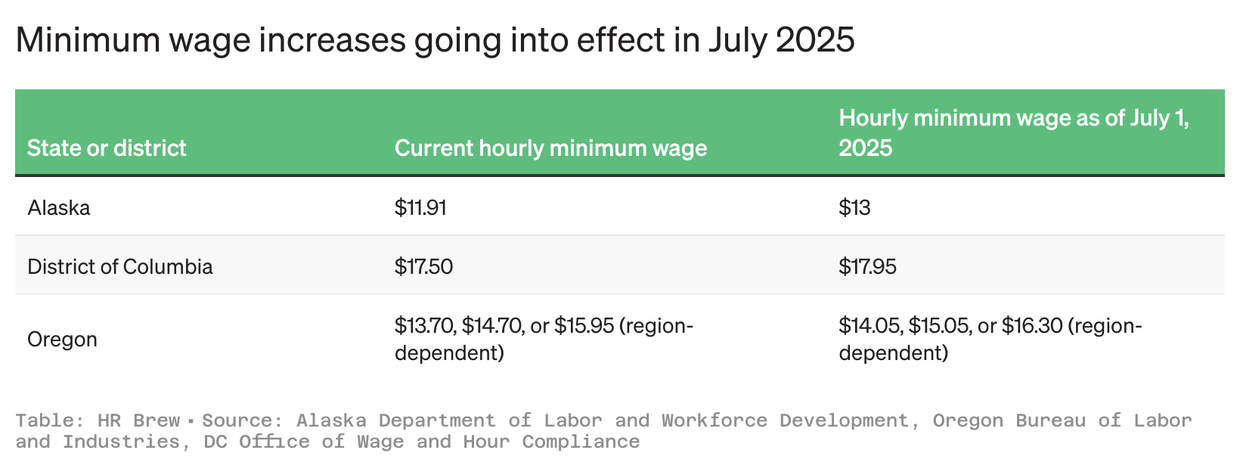 Where the minimum wage goes up on July 1
Next time you tip 20%, remember: you’re not just being generous; you’re helping close a loophole that’s older than your favorite 90s sitcom. And if you’re the one waiting tables, keep an eye on the One Fair Wage campaign—they’re pushing for change one state at a time.
Corporate Hustle
Big companies aren’t waiting for politicians. Target, Amazon, and Costco have all bumped starting wages to $15 or more, mostly due to labor shortages and public pressure. It’s a trend that’s less about altruism and more about survival in a tight job market.
This creates a weird reality: a McDonald’s in Seattle might pay $18 an hour, while one in rural Mississippi still offers $7.25. Your zip code is basically your wage destiny. Pro tip: if you’re job hunting, search for cities with higher local minimums—a move that could instantly boost your income by a few bucks.
Cool factoid: the first U.S. minimum wage was $0.25 in 1938. Adjusted for inflation, that’s about $5.30 today—still less than a fancy iced coffee. Progress is real, but it’s slow.

