
Let’s get down to serious anatomy—but in a fun way. A pig has about 14 to 16 ribs total. Spare ribs come from ribs 5 through 12 (the belly end). Baby backs come from ribs 1 through 5 (the spine end). So, you’re basically eating the pig’s real estate map.
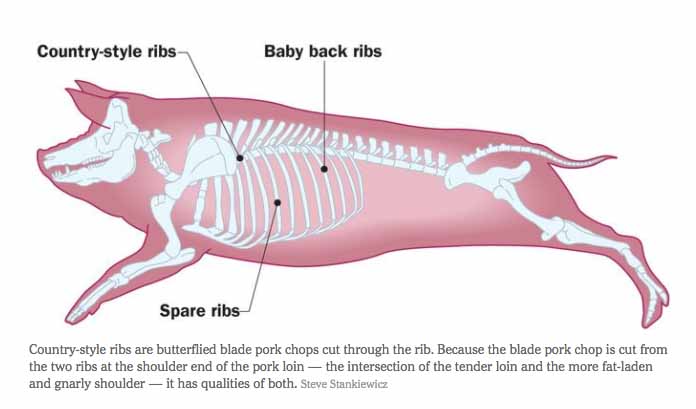 Pork Spare Ribs Diagram
What’s even weirder? Spare ribs have more bone than meat compared to baby backs. That’s why you end up gnawing like a cartoon wolf—it’s part of the charm. You’re paying for the joy of the hunt, not the meat filet.
Butcher’s Secret: The St. Louis Cut
If you order “St. Louis-style” ribs, you’re getting spare ribs that have been trimmed into a neat rectangle. Butchers chop off the hard cartilage and meat flaps, then sell those scraps as “rib tips.” Rib tips are the unsung heroes—cheap, fatty, and addictive if you smoke them right.
Moral of the story: spare ribs are the rebels of the pig. They don’t want to be perfect. They want to be messy, sticky, and end up on your shirt.

