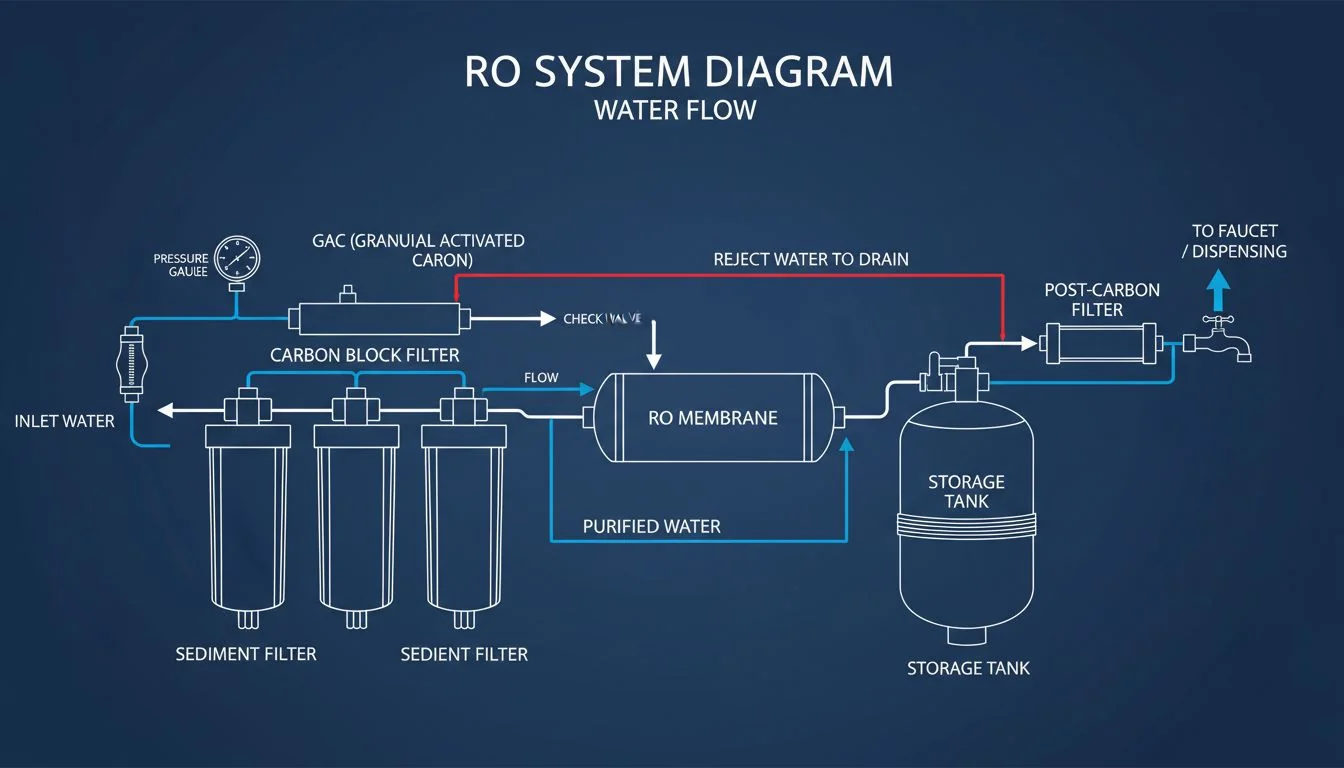
Here’s the technical bit, served without the science lecture. An RO system needs a certain amount of water pressure to shove water through that membrane. The waste water is actually the engine that creates that pressure. Without that constant flush, the membrane would get caked with calcium and magnesium gum, like a coffee grinder after a thousand espressos. Then your system stops producing pure water and you’re stuck drinking tap—gasp.
Older systems waste a lot more—like, a 1:4 or 1:3 ratio of clean to waste. Newer, more efficient models can get down to 1:1, but they cost more and still waste a cup or two. It’s a trade-off: you pay for waste water, or you pay for a new membrane every six months. Pick your poison.

