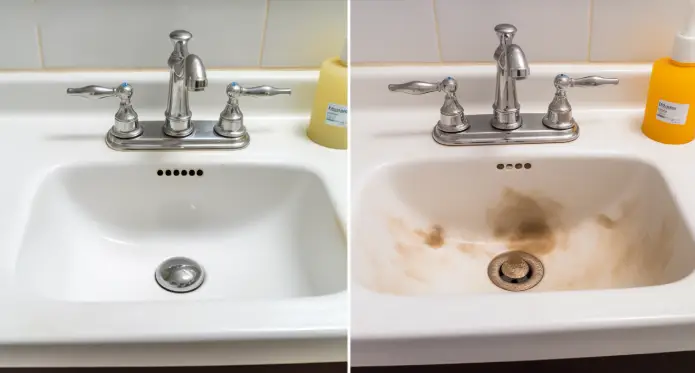
Let’s start with the most common suspect. If your water looks like it’s been filtered through a 1950s Chevy, you’re probably dealing with old iron pipes. Water is a sneaky little solvent; over time, it wears away the inside of steel or galvanized pipes. That brownish-yellow tint? That’s basically oxidized iron, aka rust, floating around in your glass. It’s gross to look at, but usually not a health emergency—though it does taste like licking a fence.
Here’s the irritating part: this often happens after you’ve been away for a few days. Water sits stagnant in the pipes, collects rust, and then dumps it all on you the moment you turn the knob. Classic timing. If you let the water run for five to ten minutes, it might clear up. If it doesn’t? Well, that pipe is probably crying for retirement.
When the City is the Problem
Before you blame your plumbing, check with your neighbors. Seriously, text them. If their water is also yellow, you’ve just moved from “house problem” to “city problem.” Municipal water systems sometimes flush their mains, which stirs up sediment. It’s like when you shake a snow globe, except the snow is rust and mineral scale. Annoying, but temporary. Pro tip: don’t do laundry during a city flush unless you want your white socks to look like they fought in a mud war.
Another fun city move: they might have changed the water source temporarily. Sometimes your tap runs on a reservoir that’s naturally rich in iron or manganese. The water is perfectly safe, but it has that “touched by the earth” aesthetic. Hey, at least it’s organic, right? (Please don’t drink organic rust, though.)

